

The Polygraph Examiner

North Carolina Polygraph Association

South Carolina Polygraph Association

Licensed by South Carolina Law Enforcement Division

Prior member of the American Polygraph Association
How Polygraph Testing Can Influence the Outcome of a Criminal Case
The power of a pre-trial polygraph examination for defense attorneys has little or nothing to do with its admissibility. Rather, that power is always found in pre-trial negotiations and case building outside of the courtroom.
Much of the legal debate around polygraph examinations centers on whether their results can be used in court. The short answer: sometimes they are admitted as evidence, but often they’re not.
But that discussion really misses the point. Why worry about the courtroom when the vast majority of criminal cases never see the courtroom?
Wise attorneys have learned to utilize pre-trial polygraph examinations to aid in their case before trial, many times making such a trial unnecessary. Polygraph examinations can and have been used successfully to:
- Convince the prosecutors that the charges against your client are unfounded
- Determine if your client would fare well if offered a police polygraph examination
- Obtain a more favorable plea-bargain and sentence
- Determine if your client is one of the truly innocent victims of false charges
- Diminish the credibility of the prosecutor’s witnesses
- Raise doubts about the alleged victim’s truthfulness
Why a Pre-Trial Polygraph Can Strengthen Your Defense
Whatever the specifics of your case, it’s important to consider the strategic benefits of a pre-trial polygraph exam, like its power in pre-trial negotiations, rather than avoiding it out of concern for time or resources.
In an article from Champion Magazine, the publication of the National Association of Criminal Defense Lawyers, Charlie Daniels states:
The Value of Polygraph Evidence in Criminal Defense
“Polygraph evidence, like any other evidence admitted in our courts day in and day out, is not infallible. It will rarely win a case in and of itself, and it always has to be one component of an entire defense presentation.
In appropriate cases, however, it can be such an important part that it can mean the difference between your client’s walking out the front door of the courthouse with you and that client’s being carried down to the lockup in shackles.
At the same time, there is no doubt that getting it before the jury or judge requires an extraordinary evidentiary battle. Despite the numerous obstacles, occasionally you can prevail. It is worth the fight.”

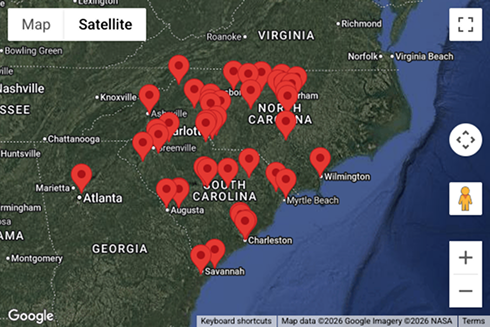
Areas I Serve
For those in the Southeast searching for “lie detector test for cheating near me,” I perform polygraph testing for infidelity in most of North and South Carolina and select areas of Georgia.
How to Get in Touch With Me
Contact The Polygraph Examiner at (800) 497-9305 for details on local polygraph and infidelity lie detector test services in North Carolina, South Carolina, and select areas of Georgia.
Due to the complexity of each case, I cannot quote prices by email. Please call or fill out the form for a free, accurate quote.
Some Ways That Pre-Trial or Post-Trial Polygraphs Are Used in Criminal Defense
Suppression and other evidence admissibility hearings:
If you’re offering a polygraph in a suppression or other evidentiary admissibility hearing, Rules 104(a) and 1101(d)(1) state that the standard rules of evidence do not apply.
Probation revocation:
Apart from pre-trial negotiations, many courts allow results of polygraph examinations in probation revocation proceedings, and most jurisdictions approve requiring such exams as a condition of probation.
Bench trials:
The admissibility hearing, or even the evidentiary proffer, will be made to the judge who is to decide the merits of the case. Even if the evidence from your pre-trial polygraph results is not formally admitted, you will be better off with a fact-finder who is at least aware of its existence.
Bail:
Evidence Rule 1101(d)(3) states that the rules of evidence do not apply to bail hearings, and 18 U.S. Code § 3142(f) confirms that the ‘rules concerning admissibility of evidence in criminal trials do not apply to the presentation and consideration of information’ at a detention or release hearing. This conforms with the general practice in all jurisdictions to consider hearsay, proffers, and other such matters at a bail hearing.
Sentencing:
Even if this doesn’t end at the pre-trial negotiations stage and continues to court, the sentencing judge has the authority to consider a wide range of sources and types of information in determining a proper sentence.
Brady discovery:
In the context of a pre-trial polygraph, several cases have addressed the issue of whether the defense is entitled to discover the results of polygraph tests on government witnesses, predictably with mixed results. For example, in Carter v. Rafferty, a polygraph examiner’s report of the examination of the key government informant-witness against boxer Hurricane Carter was Brady impeachment material to which the defense was entitled to use in showing how the trial testimony developed. Once results from a pre-trial polygraph are discovered, they can aid negotiation, support admissibility efforts, or be used creatively to strengthen the defense.
To show how the witness’s story developed:
The fact that the polygraph was administered may be an admissible operative fact in showing why the witness changed his story, whether or not you may admit explicitly the test results. The gist of the polygraph outcome will not likely be lost on the fact-finder if the questioning of the witness is structured properly. Suppose it helps your theory to show that the witness was lying in the pre-trial polygraph exam. In that case, this can be an effective cross-examination tool, especially when used to strengthen your position during pre-trial polygraph negotiations.
Purposes other than to show directly the results of the test:
Many of the above uses allow you to offer the polygraph results for some purpose other than to show that the test results indicate truth or deception. Even hostile courts seem more open to the notion of admitting polygraphs for some purpose arguably unrelated to the truthfulness of the test subject. Think creatively to consider how the facts of your case can support such an argument for the introduction of evidence of a polygraph test.
The Advantages of a Pre-Trial Polygraph Examination
Wise attorneys have learned to utilize pre-trial polygraph examinations to aid in their case before trial, many times making such a trial unnecessary. Polygraph examinations can and have been used successfully to:
- Convince the prosecutors that the charges against your client are unfounded
- Determine if your client would fare well if offered a police polygraph examination
- Obtain a more favorable plea-bargain and sentence
- Determine if your client is one of the truly innocent victims of false charges
- Diminish the credibility of the prosecutor’s witnesses
- Raise doubts about the alleged victim’s truthfulness
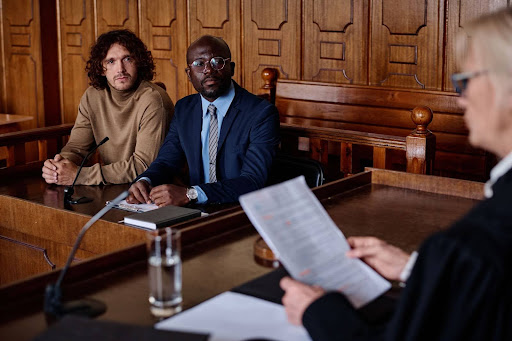
Start Resolving Doubt with Pre-Trial Polygraph Questioning
I’ve helped many clients and their attorneys use the power of truth to move forward with confidence. If you’re dealing with suspicion, false accusations, or trust issues that could affect legal outcomes, a pre-trial polygraph may be a great first step. Explore the FAQs to learn more or schedule your confidential appointment today.
Why The Polygraph Examiner?

Multi-State Licensed & Certified Relationship and Sexual Assault Lie Detection Specialist
Strict Adherence to Testing Protocols Established by the American Polygraph Association and the American Association of Police Polygraphists
Local Aiken, SC Lie Detector Polygraph with Flexible Scheduling – Days, Nights & Weekends
Unparalleled Accuracy Rates
Confidentiality Guaranteed
Reviews From My Clients


Get the Truth Today
My Affiliations
North Carolina Polygraph Association
South Carolina Polygraph Association
Licensed by South Carolina Law Enforcement Division